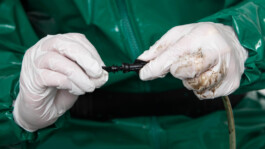
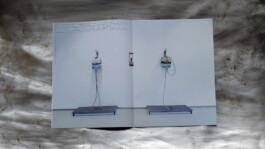
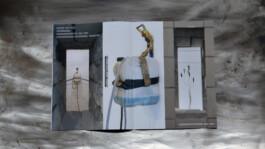
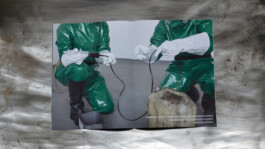
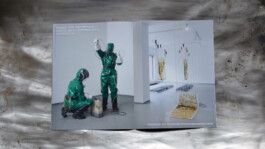
Sweat Suit 2, 2024-2025, Detail of regulating the dripping system
Care Mechanics
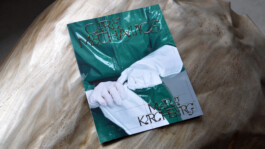
Catalogue
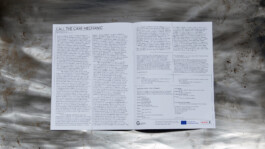
Published by Goldrausch Künstlerinnenprojekt in conjunction with the exhibition Up Close - Goldrausch 2025
"In many genres of contemporary cultural production, the concept of “care” has acquired an overdetermining popularity as a utopian ideal for the exhausted self: from shared Instagram pics about “self-care” to the gallons of soup handed out in its name to countless theater audiences, care often appears as a fluffy technology of the self, a communal and cute vitalism that one only has to submit to, unmediated. Kirchberg’s scenarios offer a different perspective. They emphasize the boring and mechanic as well as the sick and emergent dimensions of care, the repetitive labor that’s hard to tell apart from chronic stress. The kind of care that forces you to get your hands dirty, in the absence of any hope that getting your hands dirty will fix anything. This, too, is why it is crucial that the systems, as in Feeding a Leaky Skin, are not self-sustainable and don’t include motors or pumps. They rely on hands-on maintenance (Kirchberg draws the tradition of Mierle Laderman Ukeles’s Maintenance Art into a post-conceptual, fictionalized playfulness), not out of a romantic nostalgia for manual labor but to point us to the low-fi residue of production that can’t be automated or optimized or valorized. They find in the daily tasks of survival and more-than-survival a repetition that verges on the nonsensical. And where we can’t reduce “care” to the heroic fulfillment of need, it will also—and this is what the care mechanics show us, with their gentle touch and suggestive gloves—always be hot. A matter of desire." - Maxi Wallenhorst


Care Mechanics
Catalogue
Published by Goldrausch Künstlerinnenprojekt in conjunction with the exhibition Up Close - Goldrausch 2025
"In many genres of contemporary cultural production, the concept of “care” has acquired an overdetermining popularity as a utopian ideal for the exhausted self: from shared Instagram pics about “self-care” to the gallons of soup handed out in its name to countless theater audiences, care often appears as a fluffy technology of the self, a communal and cute vitalism that one only has to submit to, unmediated. Kirchberg’s scenarios offer a different perspective. They emphasize the boring and mechanic as well as the sick and emergent dimensions of care, the repetitive labor that’s hard to tell apart from chronic stress. The kind of care that forces you to get your hands dirty, in the absence of any hope that getting your hands dirty will fix anything. This, too, is why it is crucial that the systems, as in Feeding a Leaky Skin, are not self-sustainable and don’t include motors or pumps. They rely on hands-on maintenance (Kirchberg draws the tradition of Mierle Laderman Ukeles’s Maintenance Art into a post-conceptual, fictionalized playfulness), not out of a romantic nostalgia for manual labor but to point us to the low-fi residue of production that can’t be automated or optimized or valorized. They find in the daily tasks of survival and more-than-survival a repetition that verges on the nonsensical. And where we can’t reduce “care” to the heroic fulfillment of need, it will also—and this is what the care mechanics show us, with their gentle touch and suggestive gloves—always be hot. A matter of desire." - Maxi Wallenhorst